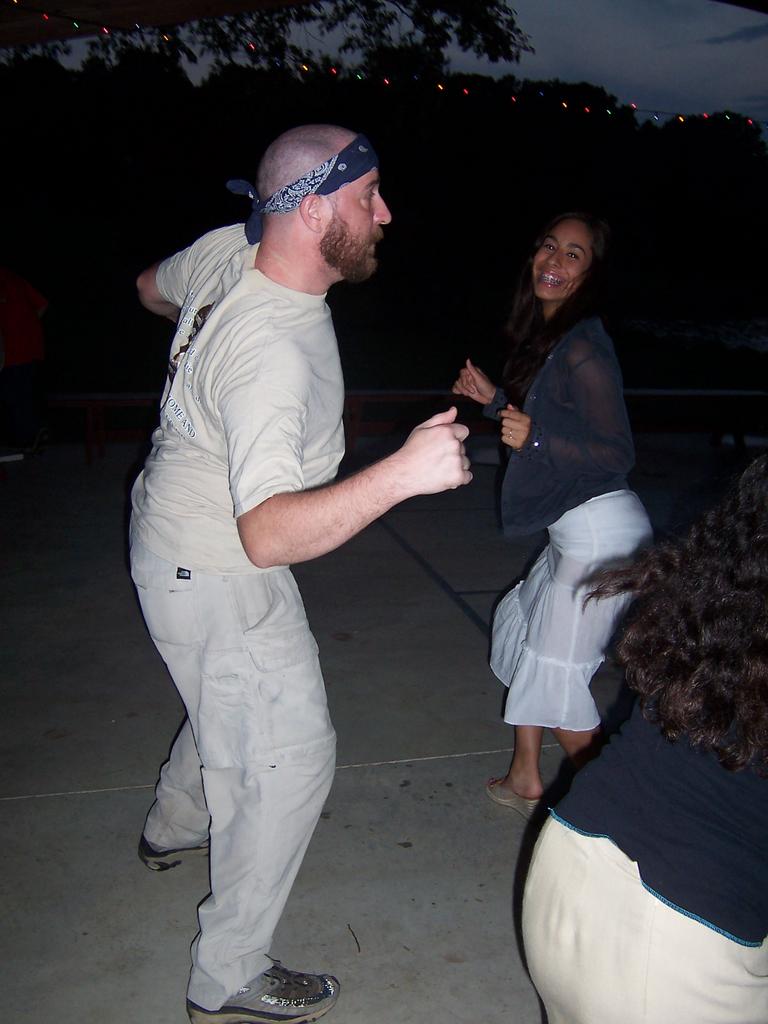
PICS: Camp St Thekla 2005

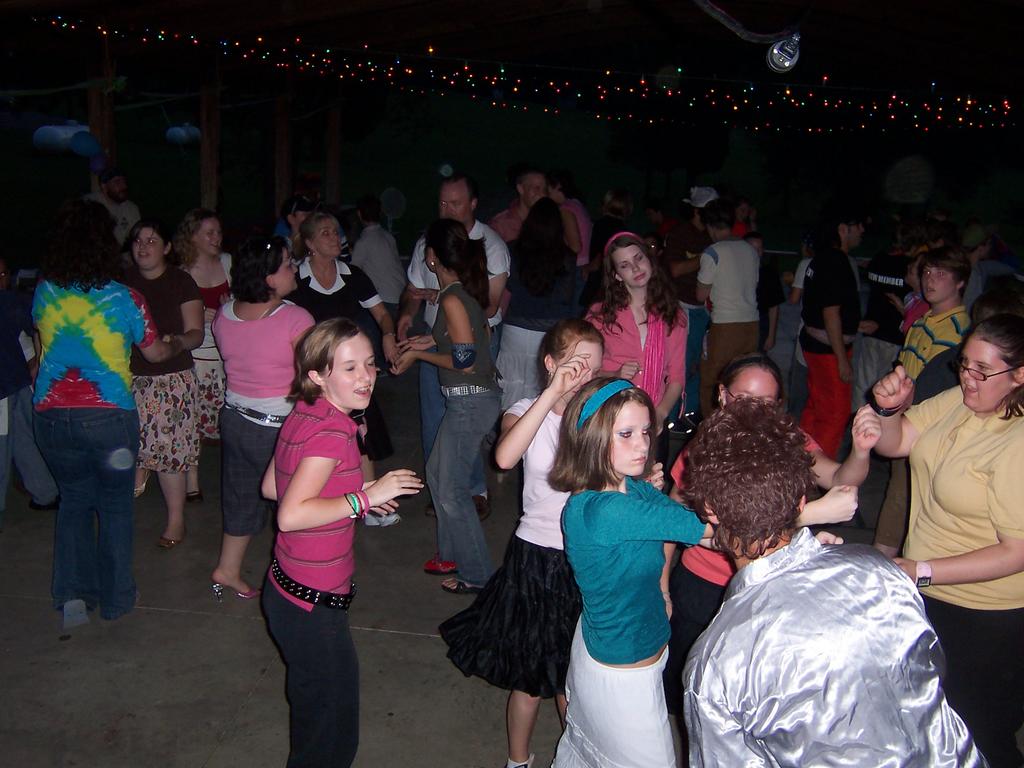
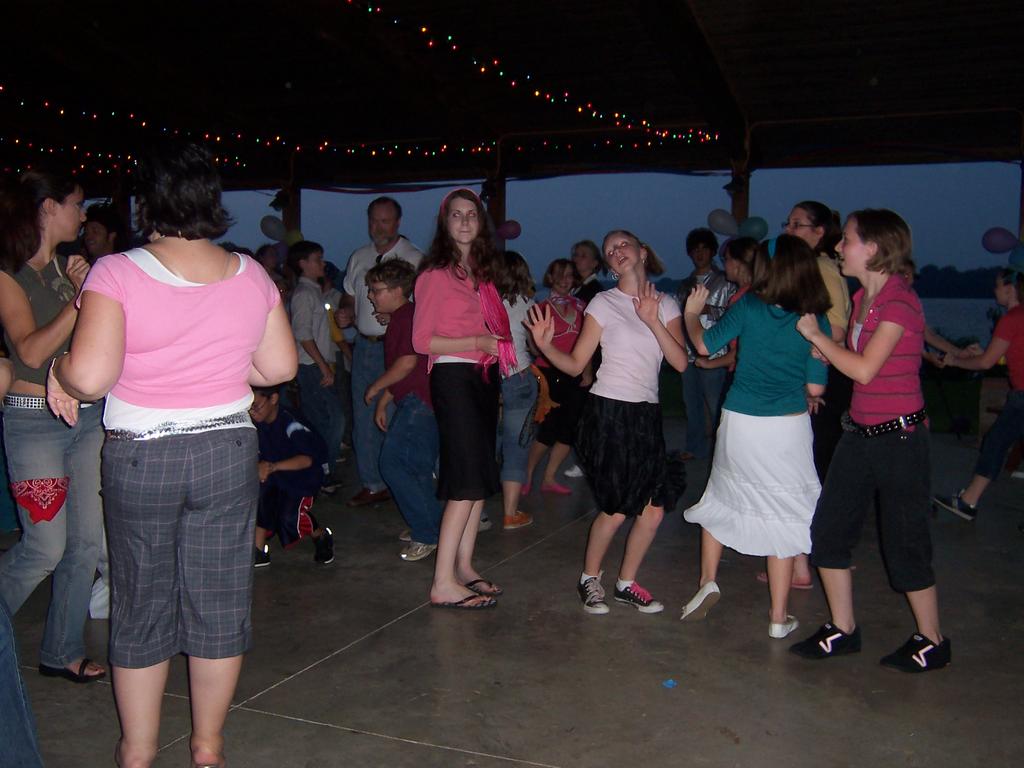
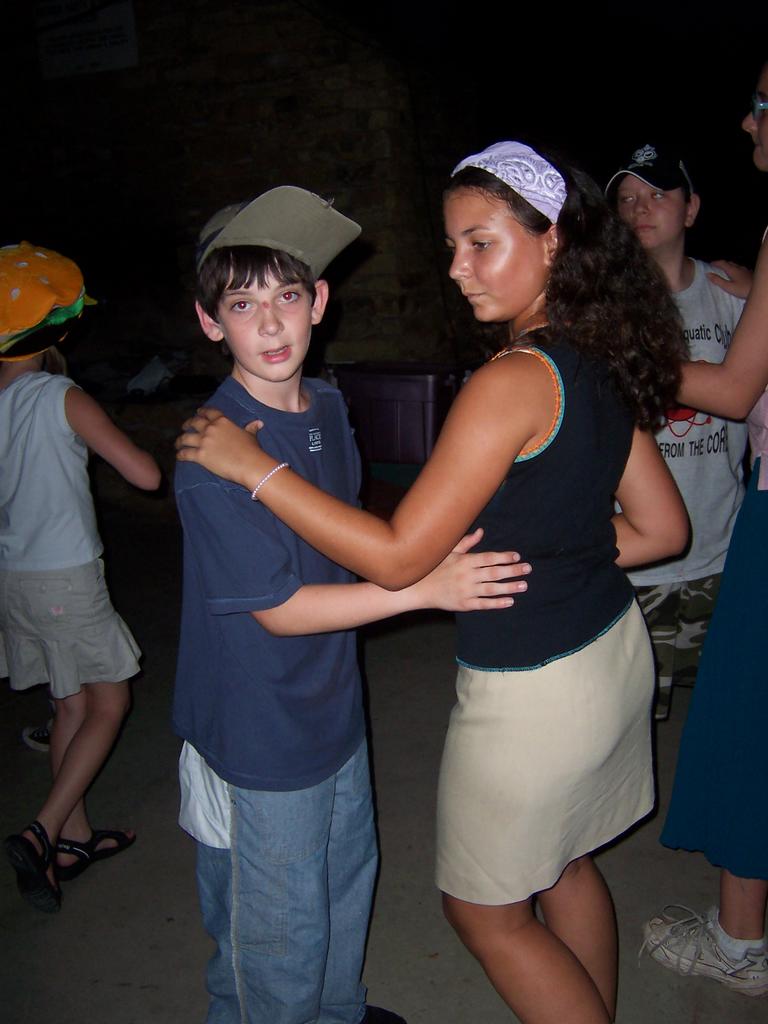
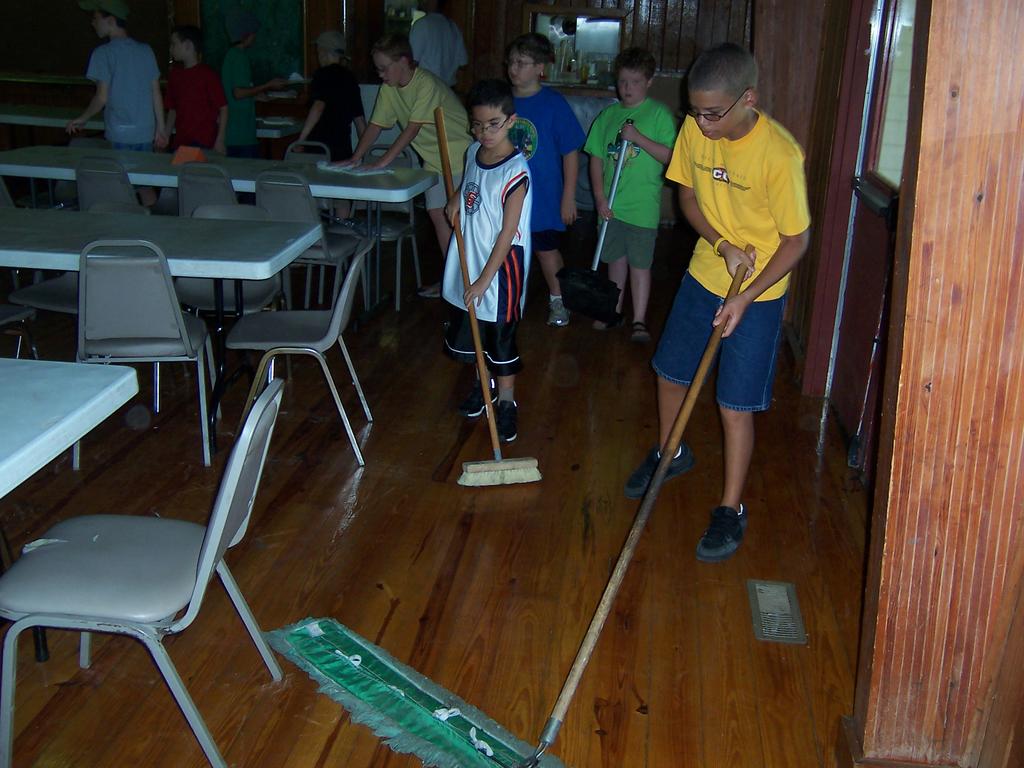
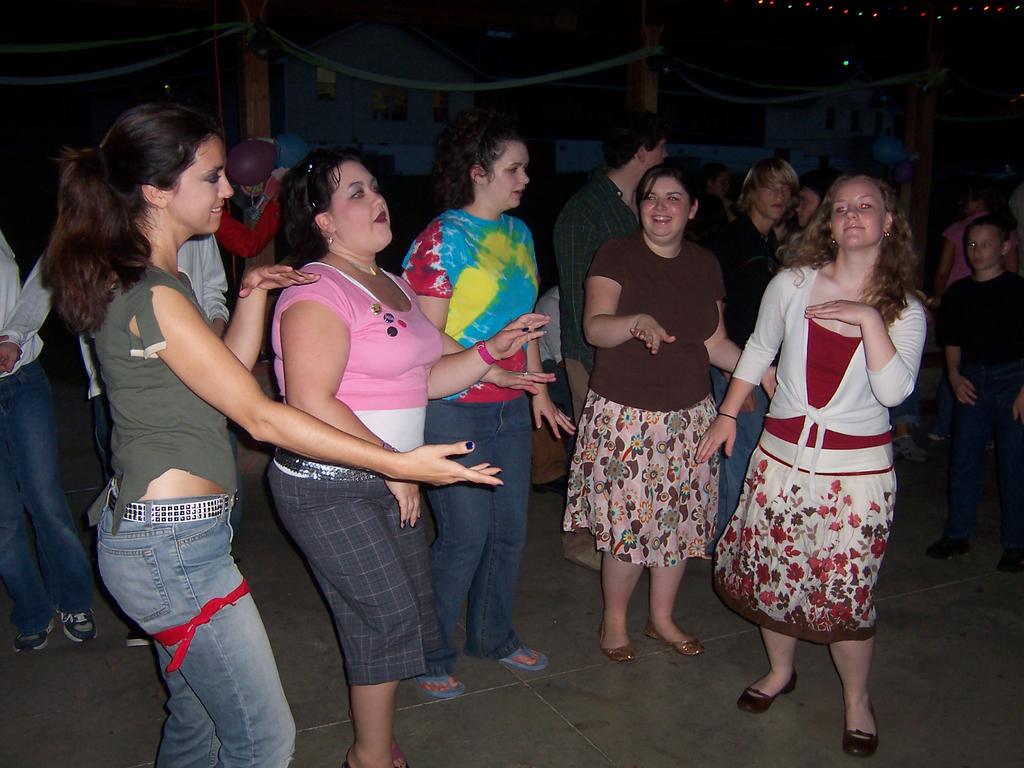
Here’s some pics taken this week at the CST 05 in Nashville, TN. Since I was busy with services and Christian Ed, I didn’t get pics of, well, services & Christian Ed. But here’s some other activities, particularly Wednesday’s dance. Enjoy!


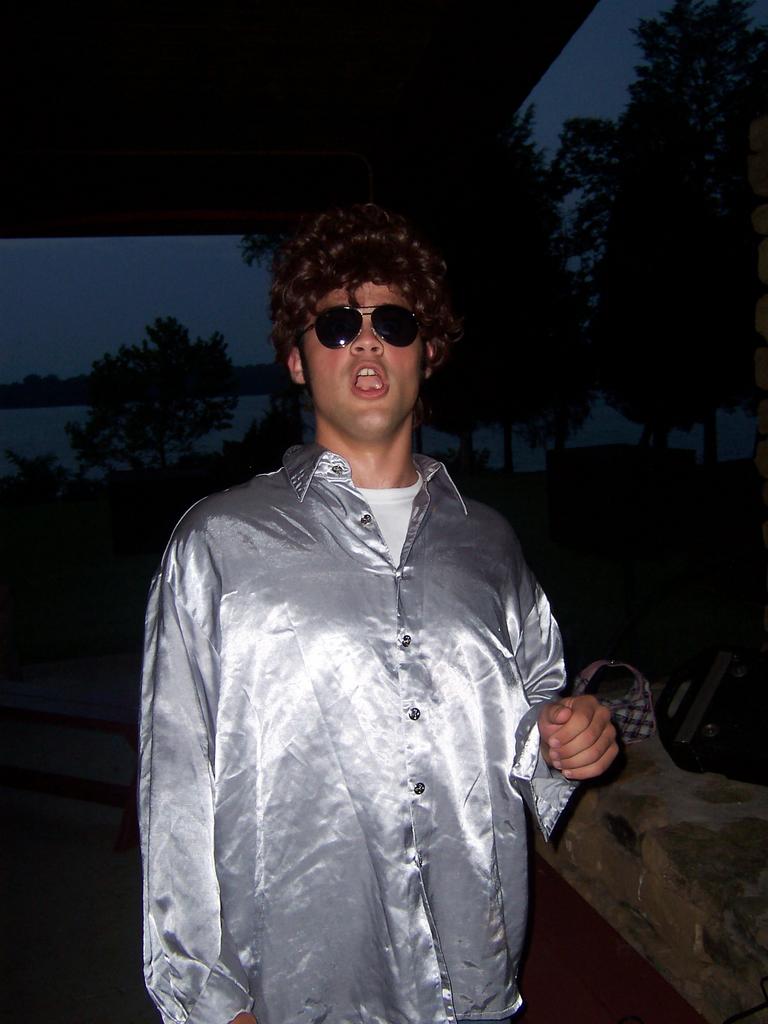
This fellow REALLY wanted me to take this picture. I understood.

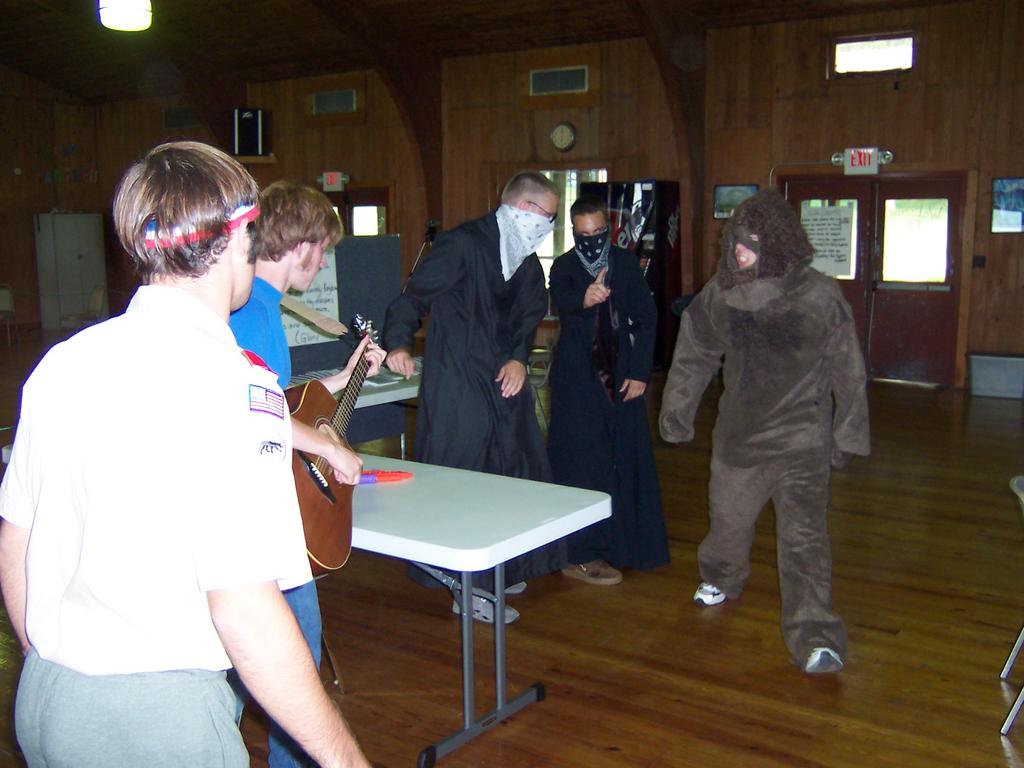
This was the visit of Biggidy Big Foot. He kidnapped Adam Roberts who, thanks to the Campers’ diligence, was later returned safely.

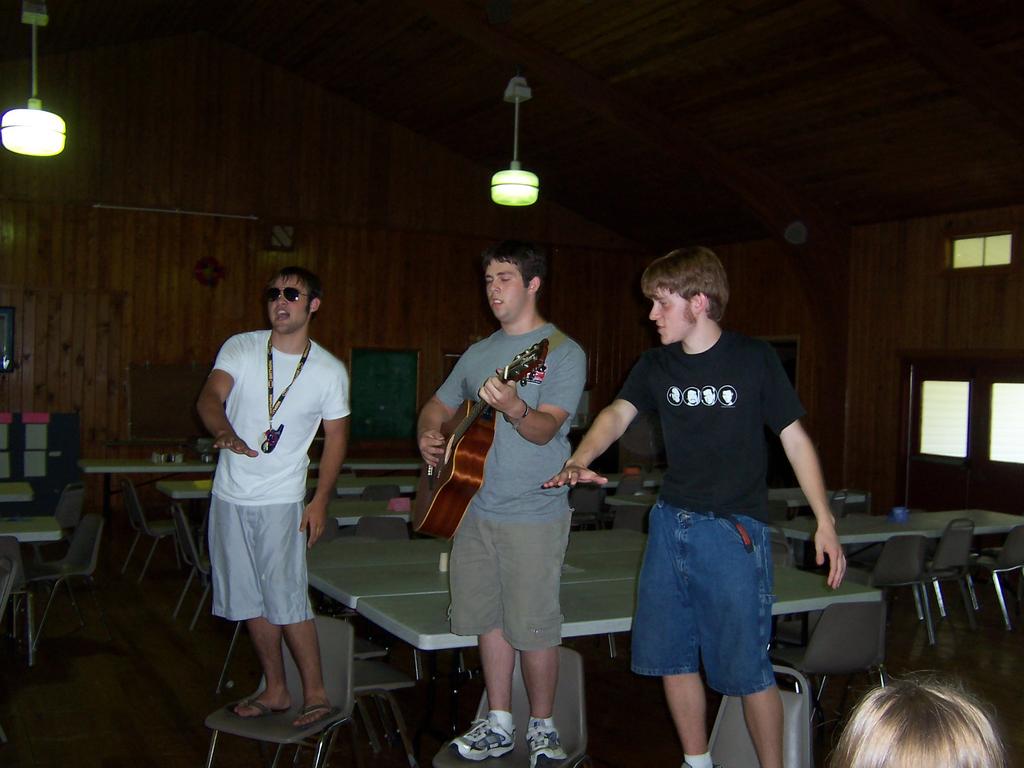
Thanks to Joel Finley, Adam & Shad Teems, and others — we had a song for everything … Snack Time, Gimme Shop, etc.
The game “Four Square” was a big hit.
Look here! Proof, parents … They can do it!


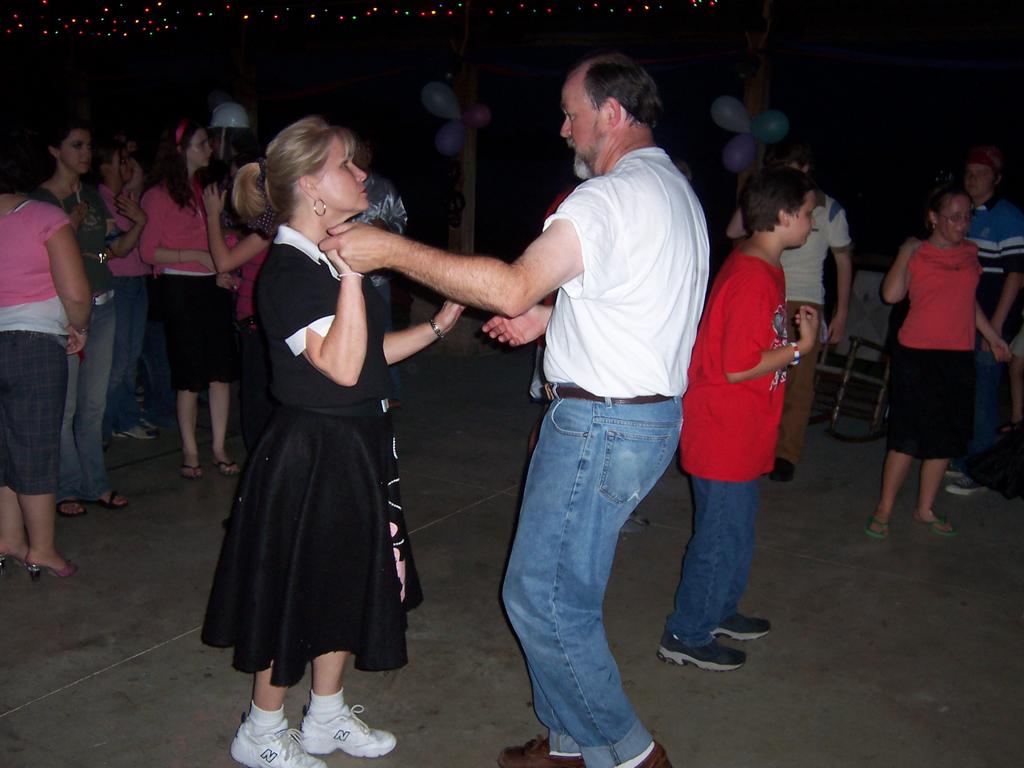
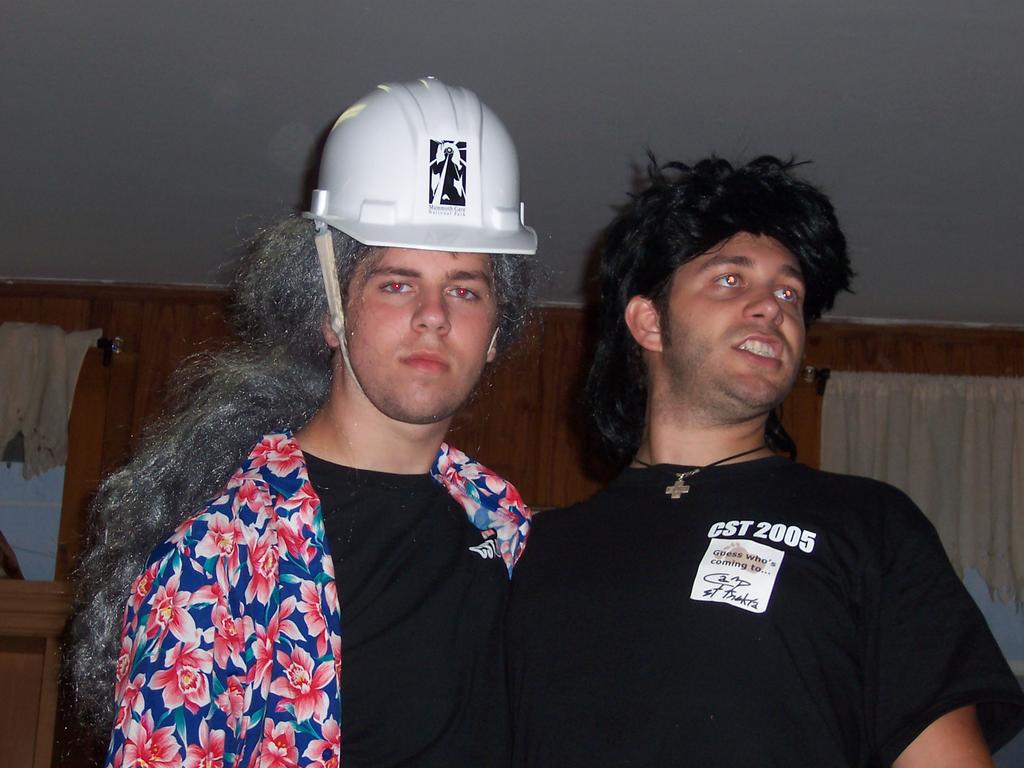
These guys, Adam & Shad, are brothers. Kooky brothers. This was their getup for the dance. Kooky. Ya think?


Sunrise, just outside my cabin, Day One.

It was a fun week. And, though you wouldn’t know it from these pics, we learned a lot, prayed a lot!

Glory to God for all things! Through the prayers of St Thekla, O God be merciful to us and save us!

Posted in Uncategorized | Leave a comment

Camp St Thekla, 2005

Greetings from H O T Nashville, Tennessee … CST, 2005.

We’re having a blast! (Everyone’s fine, parents.) Tonight’s Talent Show even saw this priest doing some Ol’ Skool Rap, and Michael Ricker, also of St Raphael’s, doing some 80’s break dancing. I know y’all all wish you could be here. 🙂

Anyway, this Blog may be a bit dormant for a few more days. Then again, if time permits, I may post some Camp pics tomorrow.

Prayers coveted.

Oh, and, no. Before you even ask … I passed my camera to Adam Roberts and asked him to take some pics of me in my performance. After the gig I came back and sat down beside him, eventually asking to have my camera back. I said: “Did you get a shot of me rapping?” He looked at me kinda goofy and said, “Actually I didn’t get any. You started rapping! I just sat here with my mouth open!”

Oh well. When you got it, you got it.

(That is what he meant. Right?)

Posted in Uncategorized | Leave a comment

A Catholic View of Eastern Orthodoxy (4 of 4)

by Aidan Nichols OP

Part 4
This brings me to the fourth and concluding section of my ‘overview’ where, as mentioned at the outset, I will single out for, I hope, charitable and eirenic comment one negative aspect of Orthodoxy where, in my opinion, the Orthodox need Catholic communion just as – for quite different reasons already outlined – Catholics need (at this time in history above all) the Orthodox Church.

The animosity, indeed the barely contained fury, with which many Orthodox react to the issue of Uniatism is hardly explicable except in terms of a widespread and not readily defensible Orthodox feeling about the relation between the nation and the Church.

There must be, after all, some factor of social psychology or corporate ideology which complicates this issue. Bear in mind that the Orthodox have felt no difficulty this century in creating forms of Western-rite Orthodoxy, for example in France under the aegis of the Rumanian patriarchate or more recently in the United States under the jurisdiction of an exarch of the patriarch of Antioch. And what are these entities if not Orthodox Uniatism – to which the Catholic Church has, however, made no objection. Nor do such non-Chalcedonian churches as the Assyrians (in Iraq and Iran), the Jacobites (in Syria) or the Syro-Malabar Christians of South India react in this way to the notion that some of their communities may be in peace and communion with the elder Rome.

A partial – and significant – exception among such non-Chalcedonian Orthodox churches is the Copts of Egypt – precisely because of the notion that the Coptic patriarch is father of the whole Coptic nation. In other words, what we may call a political factor – giving the word ‘political’ its broadest possible meaning – has entered in. It is the close link between Church and national consciousness, patriotic consciousness, which renders Uniatism so totally unacceptable in such countries as Greece and Rumania, and it is this phenomenon of Orthodox nationalism which I find the least attractive feature of Orthodoxy today. An extreme example is the widespread philosophy in the Church of Serbia which goes by the name of the mediaeval royal Serbian saint Sava – hence Svetosavlje, ‘Saint-Sava-sm’. The creation of the influential bishop Nikolay Velimirovich, who died in 1956, it argues that the Serbian people are, by their history of martyrdom, an elect nation, even among the Orthodox, a unique bearer of salvific suffering, an incomparably holy people, and counterposes them in particular to their Western neighbours who are merely pseudo-Christians, believers in humanity without divinity.

And if the origins of such Orthodox attitudes lie in the attempts of ineteenth century nationalists to mobilise the political potential of Orthodox peasantries against both Islamic and Catholic rulers, these forces, which I would not hesitate to call profoundly unChristian, can turn even against the interests of Orthodoxy itself – as we are seeing today in the embarrassing campaign on the Holy Mountain Athos, to dislodge non-Greek monks and discourage non-Greek pilgrims, quite against the genius of the Athonite monastic republic which, historically, is a living testimony to Orthodox interethnicity, Orthodox internationalism.

To a Catholic mind, the Church of Pentecost is a Church of all nations in the sense of ecclesia ex gentibus, a Church taken from all nations, gathering them – with, to be sure, their own human and spiritual gifts – into a universal community in the image of the divine Triunity where the difference between Father, Son and Spirit only subserves their relations of communion.

The Church of Pentecost is not an ecclesia in gentibus, a Church distributed among the nations in the sense of parcelled out among them, accommodating herself completely to their structures and leaving their sense of autonomous identity undisturbed.

Speaking as someone brought up in a national Church, the Church of England, though I am happy to consider myself perfectly English, I also regard it as a blessing of catholicity to be freed from particularism into the more spacious life of a Church raised up to be an ensign for all nations, a Church where those of every race, colour and culture can feel at home, in the Father’s house.

It is in this final perspective that one should consider the role of the Roman bishop as a ‘universal primate’ in the service of the global communion of the churches. One of the most loved titles of the Western Middle Ages for the Roman bishop was universalis papa, and while one would nor wish to retrieve all aspects of Latin ecclesiology in the high mediaeval period, to a Catholic Christian the universal communion of the local churches in their multiple variety does need a father in the pope, just as much as the local church itself, with its varied congregations, ministries and activities, needs a father in the person of the bishop.

It is often said that such an ecclesiology of the papal office is irredeemably Western and Latin, and incapable of translation into Oriental terms. I believe this statement to be unjustified. Just as a patriarch, as regional primate, is responsible for the due functioning of the local churches of in his region under their episcopal heads, so a universal primate is responsible for the operation of the entire episcopal taxis or order, and so for all the churches on a world-wide scale. Needless to say, this office is meant for the upbuilding, not the destruction, of that episcopal order, founded ultimately as the latter is on the will of the Redeemer in establishing the apostolic mission, and further refined by Tradition in the institution of patriarchal and other primacies in this or that portion of the ecclesial whole. But at the same time, if the ministry of a first bishop is truly to meet the needs of the universal Church it will sometimes have to take decisions that are hard on some local community and unpopular with it.

Were the Orthodox and Catholic Churches to become one, some reform of the structure of the Roman primacy would nonetheless be necessary, especially at the level of the curia romana. The congregation for the Oriental Churches would become a secretariat at the service of the permanent apocrisaries (envoys) of the patriarchs and other primates.

The great majority of the other dicastsries would be re-defined as organs of the Western patriarch, rather than the supreme Pontiff. And yet no universal primacy that merely rubber-stamped the decisions of local or regional churches would be worth having; it would be appearance without reality. Thus the pope as universal primate would need to retain: first, a doctrinal organ for the coordination of Church teaching, and secondly, some kind of ‘apostolic secretaryship’, replacing the present ill-named ‘Secretariat of State’, for the harmonisation of principles of pastoral care. To these could be added, thirdly, whichever of the ‘new curial’ bodies dealing with those outside the household of faith might be deemed to have proved their usefulness, and finally, a continuing ‘Council for the Public Affairs of the Church’, for the defence of the freedom of the churches (and of human rights) vis-à-vis State power.

The utility of the fourth of these to the Orthodox is obvious. As to the rest (of which only the first two are crucial in importance) they should function only on the rarest occasions of ‘crisis-management’ as instruments of papal action in the Eastern churches. Normally, they should act, rather, as channels whereby impulses from the Eastern churches – impulses dogmatic, liturgical, contemplative, monastic in tenor – could reach via the pope the wider Church and world.

For this purpose the apocrisaries of the patriarchs, along with the prefects of the Western dicasteries, would need to constitute their governing committees, under papal presidency. It should go without saying that Oriental churches would naturally enjoy full parity with the Latin church throughout the world, and not simply in their homelands – the current Catholic practice.

The Orthodox must ask themselves (as of course they do!) whether such instruments of universal communion (at once limiting and liberating) may not be worth the price. Or must the pleasures of particularity come first?
Posted in Uncategorized | Leave a comment

A Catholic View of Eastern Orthodoxy (3 of 4)

by Aidan Nichols OP

Part 3
I come now to the third part of my paper which concerns the present state of Catholic-Orthodox relations. After a preparatory phase of initial contacts known as the ‘dialogue of charity’, the Catholic-Orthodox theological dialogue was officially established in 1979, with the ‘common declaration’ made by the Ecumenical Patriarch Dimitrios 1 and Pope John Paul II at the conclusion of the latter’s visit to the Phanar, the patriarchal seat in Istanbul, in November of that year.

At that juncture the situation between Orthodox and Catholics was from one point of view more hopeful than at, say, the time of the Council of Florence, but from another viewpoint it was less hopeful. It was more hopeful in that the participation of the Orthodox in the Ecumenical Movement from the 1920’s onwards had accustomed them to the idea of work for Christian unity – though a strong and vociferous minority have always expressed reservations about this policy as likely to confirm what Catholics would call ‘indifferentism’.

If at its origins the Ecumenical Movement was largely a pan-Protestant conception, the entry of the Orthodox into its ranks pressed that Movement, nonetheless, in a direction which made it possible for the Catholic Church to join it, nearly forty years later, on the eve of the Second Vatican Council. The Orthodox had this salutary effect in that their voices – combined with those of neo-patristically minded Anglicans (a species more common then than now) – succeeded in dispelling the sense that ecumenism was basically a movement preparing a purely moral and sentimental – rather than doctrinal and sacramental – union of Christians.

Along these broad lines, then, the Orthodox churches had functioned highly constructively within the Ecumenical Movement up to the 1980’s, though whether they can continue to do so in the context of the World Council of Churches in the future – given the capture of the latter by a largely secular agenda – remains to be seen.

To this glowing account of Orthodox ecumenism one important caveat must be appended. It is possible to overrate the theological component of the role of Orthodoxy in the twentieth century Ecumenical Movement by overlooking the fact that the desire of many Orthodox for greater contest with Western communions was in part a pragmatic and even political one.

With the collapse of the Russian Tsardom in 1917, that mighty protector of the Orthodox churches was no more, and Orthodox communities in hostile States like Bolshevik Russia or Kemalist Turkey, or in comparatively weak confessionally Orthodox States such as Bulgaria and Greece, needed the support of a still surviving Christian political conscience in such great Powers of the first half of this century as Britain and the United States. This realistic caution about the motives of some Orthodox ecumenism brings me to the less hopeful features of the situation which surrounded the opening of official dialogue at the beginning of the 1980’s.

In the more than five hundred years since the collapse of the Florentine Union, Orthodox and Catholics had had time to practise yet more polemics against each other, to coarsen their images of each other, and also to add (especially from the Orthodox side) new bones of doctrinal contention though in one case, the definition in 1870 of the universal jurisdiction and doctrinal infallibility of the Roman bishop, the dismay of the Orthodox was of course entirely predictable, as was pointed out by several Oriental Catholic bishops at the First Vatican Council.

We find for instance such influential Orthodox thinkers as the Greek lay theologian John Romanides attacking the Western doctrine of original sin as heretical, thus rendering the Latin Marian dogma of the Immaculate Conception – Mary’s original righteousness – superfluous if not nonsensical. Or again, and this would be a point that exercised those responsible for the official dialogue of the last fifteen years, some Orthodox now wished to regard the pastoral practice whereby many local churches in the Latin West delay the confirmation (or chrismation) of children till after their first Holy Communion as based on a gravely erroneous misjudgment in sacramental doctrine.

None of this, however, prevented the Joint International Commission for Theological Dialogue between the Roman Catholic Church and the Orthodox Church – to give it its mouthful of a title – from producing several (three, to be precise) very useful documents on the shared understanding (in the Great Church of which Orthodoxy and Catholicism are the two expressions) of the mystery of the Church herself, in her sacramental and especially eucharistic structure, seen in relation to the mystery of the triune God, the foundational reality of our faith. These statements are known by their place and date of origin: Munich 1982, Bari 1987, and Valamo (Finland) 1988.

The shadow cast more recently was in 1979 only a cloud on the horizon, a cloud, as in Elijah’s dealings with Ahab in the First Book of Kings, no bigger than a man’s hand. And this is the threat posed to the dialogue by the re-invigoration of hitherto communist-suppressed Uniate or Eastern Catholic churches, notably those of the Ukraine and Transylvania, in the course of the later 1980’s and 1990’s.

The existence of Byzantine-rite communities in union with the Holy See was already a major irritant to the Orthodox, even though some of these communities, for instance in Southern Italy and Sicily, had enjoyed an unbroken existence and were in no sense the result of prosyletism or political chicanery.

What the Orthodox quite naturally and rightly object to is Uniatism as a method of detaching Orthodox dioceses and parishes from their mother churches on a principle of divide et impera. Not all partial unions with the Byzantine Orthodox can be brought historically under this heading, for some, such as that with a portion of the Antiochene patriarchate which produced the present Melkite church, are principally the result of Eastern, not Western, initiative.

But that the pope (John Paul II) who presided over the beginnings of Catholic- Orthodox dialogue should also be a pope who played a major role in the destruction of Communism has certainly proved to be one of the ironies of Church history. The passing of Marxist-Leninist hegemony, the internal disintegration of the Soviet Union, the copycat rebellions against a Nationalist Communist nomenklatura in such countries as Rumania, made possible the re-emergence of Oriental Catholic churches once forcibly re-united with the Orthodox by Stalin’s Comintern in the aftermath of World War II. The process has been sufficient to place in jeopardy the project of Catholic-Orthodox reunion which is the one goal of ecclesiastical as distinct from merely public policy most dear to the heart of this extraordinary Slav bishop of Rome.

Thus in June 1990 at the plenary meeting of the Commission at Freising in Bavaria, the Orthodox refused to continue with the official agenda in discussing ‘Conciliarity and Authority: the Ecclesiological and Canonical Consequences of the Sacramental Stricture of the Church’ until a document could be agreed on the Byzantine-rite Catholic churches, a document actually produced at Balamand in the Lebanon in 1993 and which has, regrettably, failed to satisfy many Orthodox whilst angering many Oriental Catholics.

To be continued …

Posted in Uncategorized | Leave a comment

A Catholic View of Eastern Orthodoxy (2 of 4)

by Aidan Nichols OP

Part 2
I turn now to the actual genesis of the schism from a Catholic standpoint, along with some account – necessarily summary and unadorned – of the four historic ‘dividing issues’: those disputed questions which historians can show to have most worried many Easterners when looking at developments in the Latin church, and which constituted the agenda of the reunion Councils, Lyons II in 1274 and Florence in 1439.

This is of course an enormous subject which would require an account of most of Church history in the first millennium to do it justice. Here I can only give a brief indication and refer those interested in more historical detail – and certainly there is no shortage of fascinating material available …

A Study in Schism.
The development of the schism between Greek East and Latin West was owed essentially to three factors. The first of these is the increasing cultural distance, and so alienation, suspicion and eventually hostility, which counterposed, one against the other, the Byzantine and Latin halves of the Mediterranean basin, as also tracts of Europe further afield – especially Russia on the one hand, the Germanic world on the other, evangelised as these had been from, respectively, Greek and Roman mother-churches. As a common language, a common political framework, a common social structure, and a common theological universe became, in the late patristic and early mediaeval periods, a thing of the past, Eastern and Western Christians ceased to feel themselves parts of one Commonwealth – something given especially brutal expression in the sack of Constantinople by the crusader host in 1204.

The second principal factor in the making of the schism was the rivalry between the Byzantine emperors and the Roman popes considered as officers of the Christian commonwealth responsible for its overall direction and for the adjustment of organisational problems or clashes within it. Constantine the Great not only inherited the imperial ideology of the supreme rulers of the Roman res publica, but also permitted – perhaps encouraged – the transformation of this ideology into a fully fledged imperial theology by such figures as Eusebius of Caesarea.

The Christian emperor, though pretending to no power to determine doctrine, did claim an overall right of supervision for the public, external life of the churches. But this was exactly the position which those in the West who supported the developing theology of the unique ‘Petrine’ ministry of the Roman bishop wished to give the pope. In the first millennium there was no generally agreed ecclesiology of the Roman primacy. There are Latins who took a minimalist view of it, Greeks who took a maximalist. But in general, of course, Westerners came to favour a high theology of the Roman church and bishop, Easterners to regard such a theological doctrine with foreboding as a departure from the ethos of the Pentarchy, the idea of the necessary concord of the five patriarchs Rome, Constantinople, Alexandria, Antioch and Jerusalem – which by the eighth century at least must count as the normal Byzantine picture of what specifically episcopal leadership entailed.

The third and last factor in the turning of tensions into an actual break was the emergence of the four disputed questions which served as lenses concentrating the heat given off in these chronic or structural tensions until it became explosive.

In order of their historic emergence, these questions or topics are: the Filioque, the nature of the Roman primacy, the use of azymes or unleavened bread in the Western Mass, and the doctrine of Purgatory, and especially the symbolisation of the intermediate state as a purifying fire.

On all these points, even that of azymes which might be thought an issue singularly unprofitable or at least peripheral to Christian thought, theological ideas of great interest were brought forward on both sides, though probably only the Filioque and the primacy question would be regarded as ‘dividing’ issues today.

As regards the Filioque – the procession of the Holy Spirit, according to the amended Latin version of the Creed of Nicaea-Constantinople, not only from the Father but from the Son as well, I believe that, could we count on a modicum of good will, we might well be able, without damage to the doctrinal integrity of our two communions, to resolve this technical issue in Trinitarian theology: technical, yet also crucial for how we see the Spirit in relation to the Son, and so their respective economies in their interaction in our lives.

The matter of the Roman primacy is less easily disposed of, and I will return to it at the end of my presentation. So much – very schematically, and inadequately, – on the historic genesis of the schism and its quartet of doctrinal conflagration points. The operation of the three factors – the mutual cultural estrangement, the conflicting expectations for the roles of emperor and pope, and the specifically theological issues, meant that by the 1450’s the Byzantine church, in rejecting the Florentine union of 1439, had definitely broken communion with the Roman see, a situation gradually extended in a rather uneven way to the rest of the Orthodox world in the course of the sixteenth and seventeenth centuries, there being some examples of communicatio in sacris – for instance of the use of Latin clergy, chiefly Jesuits, to preach and hear the confessions of the Greek Orthodox faithful – even as late as the first half of the eighteenth century in some places.

To be continued …

Posted in Uncategorized | Leave a comment