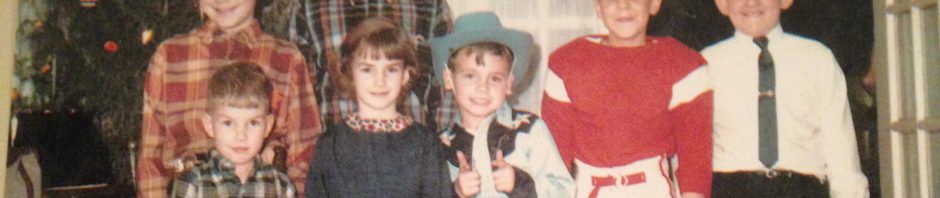
All [Future] Saints [in Disquise] Party


THIS IS THE HEAD …


Hello everybody!


The Lord and Saints … (it’s the annual “All Saints Party” at St George).


And this, so I hear, is a 70s Guitar Man …


Of course, pie eating contest …


St George attacks a dragon …


This pie … attacks this guy.


“What? You think that’s funny?”


“I thought it was pretty funny … then I had to make a pit stop.”


Texas is pretty this time of year.


This, ladies and gentlemen, is the pie-eating winner!


The first man on Mars … followed by the owner of the spaceship.


Earlier, herself in make-up …


This guy’s make-up needed a cover-up …


Ah yes … one of the joys of adulthood: sitting.


… and eating.


And smiling because this is “Your House” tonight! (Vivian’s in charge of All Saints.)


“But, I’m in charge on all other days …”


Where are the parents, here? These men are making their own cookies & cakes!


… and voila! This fellow came into the party a mere tike, ate up a bunch of goodies — now look at him!


Appalachian State … meets Texas.


Lady Bugs have their moments, too …


Amy Oakley?


The Dynamic Trio.


(I had to sneak into the darkened church to get something … couldn’t resist.)


Oh my!


Fr John … You ARE my father!


Word has it there’s a bug going around …


We made sure to have a doctor on hand.


I think these guys went trick-or-treating early on …


Some say peppers will cure what ails ya …


“It’s like this: Find an electric socket and, using these two fingers, you …”


“Yikes! Watch out for the Kung Fu Guy!”


“No fair! I wanted to be the Kung Fu Guy!”


Honest to goodness, these folks told me they were supposed to be Raggedy Ann & Andy — I thought it was Wendy & Waldo!


Very nice. (She won the contest in her age group … I mean, who’s gonna vote against Her?)


Miss E and Miss Susie …


My goodness! This is actually a Miss, too (I think).


Whooooooooo — whooooooooooooo!


“Who’s gonna deal with the pirate?”


“What pirate?”


“Stand back, ladies!”


Whoop-eeeesh!


“Arrrrrrrrrgh!” cries Venom, having been dealt a lethal blow by Indie.


“Humph … boys.”


And these …


ladies and gentlemen …


are …


THE FEET!

Posted in Uncategorized | Leave a comment

Halloween Hypocrite (Revisited)

The following is timely a repost from 2005.

Don’t get me wrong. I’m not opposed to fantasy, games, dress-up, and such. And if you promise not to tell anyone: I’ve read most everything Stephen King has written. Harry Potter? Used to be opposed, now I’ve read ’em all.

I’m just not interested in celebrating this feast.

I did as a kid. It was a parent thing. (Hi Mom!) That and, well, a candy thing. When I got older I was confused. One year, honest to goodness, we had a Haunted House IN the church! [Folks, even now I get the willies just recalling it.] Like the Haunted House rides at the Fair, it was more silly than spooky. But, you gotta admit, Wee Erd.

Much has changed since I was a jitter-bug. More people are more kooky. And not all Christian “histories of Halloween” are accurate. [Here’s my own collection of lore from ago — along with its “correction.”]

Call me a fundamentalist, but I actually get excited when schools cancel its celebration. Here … and H E R E.

I used to provide letters to parents asking school administrators to excuse Orthodox kids from Halloween celebrations.

As mentioned in one of the posts linked above, my son really wants to participate in Trick-or-Treat and revels in any and all Halloween decorations. Just the other day he told his 3-year old sister, “Helen … we don’t celebrate Halloween. But, when you get to be a grown-up, you can if you want to. Right, Dad?”

Right … son.

Okay, so here’s the hypocrite part. Back at Nashotah House, there was a legend of the Black Monk. You can read it here. It was our first year in seminary and they were taking all the seminarians’ kids on a wagon ride trick-or-treating. I was in my really anti-Halloween twisted phase. We didn’t have kids; there was no reason for us to go, but everyone knew my proclivities.

Then something got into me. I remembered a ghoulish mask that I’d packed away in a back closet. We’d used it in some radio gig and, for some reason, I still had it. When I heard the tractor and wagon approaching our apartment on the return trip, I quickly donned a cassock and the hooded mask and went and stood by the road. Motionless. Staring. Those kids screamed their heads off! (My wife couldn’t believe what I was doing.)

After they’d passed, I ran into the apartment, de-costumed, and walked down to where all the hub-bub was to bask in my ghoulish glory.

One of the students, a Middler, rushed up to me and said, “That was great! Man! You were awesome!”

Speechless, I just stood and smiled at him. Then he said, “You really got us good when you were standing in the cemetery!”

(Uh, folks … though I never told him, I didn’t go up to the cemetery that night.)

That said, for those interested — listen to Fr George Morelli’s excellent (and gentle) expose on this very non-Orthodox celebration.

Image Source

Posted in Uncategorized | Leave a comment

BARTHOLOMEW & American Primates

NEW YORK – ­ His All Holiness, Ecumenical Patriarch Bartholomew gave an audience … Tuesday, Oct. 27, to the Orthodox Primates of the USA, most of whom were present the previous evening for the Ninth Annual Orthodox Prayer Service for the United Nations Community. Present at the audience were Archbishop Demetrios of America (Greek Orthodox Archdiocese); Metropolitan Philip (Antiochian Orthodox Archdiocese); Metropolitan Christopher (Serbian Orthodox Archdiocese); Metropolitan Nicholas (Carpatho – Russian Diocese); Archbishop Nicolae (Romanian Orthodox Archdiocese); Metropolitan Jonah (Orthodox Church in America), Metropolitan Constantine (Ukrainian Orthodox Church in the USA); Bishop Ilia (Albanian Orthodox Diocese) and Archpriest Alexander Abramov (Representation of the Moscow Patriarchate in the USA). Archbishop Demetrios welcomed His All Holiness on behalf of the Primates.

The remarks of His All Holiness follow:

“We bring to you the greeting, the blessing, and the love of the Apostolic, Patriarchal and Ecumenical Throne of the First-Called Andrew, and we express as well our appreciation to the Most Reverend Chairman of the Standing Conference of the Canonical Orthodox Bishops in the Americas, His Eminence Archbishop Demetrios of America, for bringing you together today so that we may have this opportunity for fellowship in the Holy Spirit and for a dialogue of love.

For nearly fifty years, the Standing Conference has served as a place for the Primates of the various jurisdictions that are present in North America to gather and discuss common concerns and issues. Also, through the many agencies that have been formed under your aegis, you have been able to activate pan-Orthodox ministries that extend beyond the confines of your particular Churches, so that your united effort might be brought to bear in common interests.

The success of SCOBA has always been based in the true sense of cooperation, of synergy, between the Orthodox ecclesiastical entities here in North America. You have been successful at providing a common witness to all the Orthodox Faithful, even as you have maintained your ties to the Mother Churches and sought to establish yourselves in the countries and culture within which you live.

Nevertheless, SCOBA has always been an organization that lacks authorization from the Mother Churches, being a self-started and volunteer body. This reality reflects both strengths and weaknesses ­ strengths in that SCOBA was free to find creative solutions to issues and problems, without seeking approval from a higher authority ­ and weaknesses, because without authorization from the Mother Churches, there has been no methodology to effectuate decisions and policies that prepare for the future.

Given these considerations, it was logical for the status quo to evolve, as it did at the Synaxis of the Heads of the universally recognized Autocephalous Churches last October at the Ecumenical Patriarchate. At that time, the common will of the universally recognized Autocephalous was
expressed as follows:

As Primates and the Representatives of the Most Holy Orthodox Churches, fully aware of the gravity of the aforementioned problems, and laboring to confront them directly as ‘servants of Christ and stewards of God’s mysteries’ (1 Cor. 4:1), we proclaim from this See of the First-throne among the Churches and we re-affirm:

1) our unswerving position and obligation to safeguard the unity of the Orthodox Church in ‘the faith once for all delivered to the saints’ (Jude 3), the faith of our Fathers, in the common Divine Eucharist and in the faithful observance of the canonical system of Church governance by settling any problems that arise from time to time in relations among us with a spirit of love and peace.

2) our desire for the swift healing of every canonical anomaly that has arisen from historical circumstances and pastoral requirements, such as in the so-called Orthodox Diaspora, with a view to overcoming every possible influence that is foreign to Orthodox ecclesiology. In this respect we welcome the proposal by the Ecumenical Patriarchate to convene Panorthodox
Consultations within the coming year 2009 on this subject, as well as for the continuation of preparations for the Holy and Great Council.

As you all know and are well aware, the Fourth Pre-Conciliar Pan-Orthodox Conference did take place in June of this year, at the Center of the Ecumenical Patriarchate in Chambésy, Switzerland. The Decision, and the Regulations promulgated by the Pre-Conciliar Conference establish a modus operandi by which the Bishops, in the regions of the world defined by the Conference, may progress institutionally toward the solutions that we all seek in the forthcoming Great and Holy Council.

This is not to say that there will not be difficulties along the way. The region defined for this portion of the Western Hemisphere is quite extensive, including Spanish-speaking Mexico and Central America, together with the rest of Anglophone and Francophone North America. There are many bishops who have never been represented in SCOBA, and who will now participate through their Mother Churches in the Assembly of Bishops. There are also the issues of so-called ‘autonomies’ and ‘autocephalies’ that are not recognized by the Church Universal, and for which solutions must be found in order allow for full participation on every level in the processes of the Assembly of Bishops. All of the issues and problems that require resolution first require willing hearts and minds, study and careful consideration, and the unfailing loving application of the canonical tradition of out Holy Orthodox Church.

As the convener of the Pan-Orthodox world, the Ecumenical Patriarchate stands ready to be of assistance through guidance and an ongoing dialogue based in the truth of Gospel. We welcome positive suggestions and, as it said in our modern world, ‘thinking outside the box,’ so that we may construct models of ecclesiastical polity and governance with foundations sunk deep in the venerable tradition of our One, Holy, Catholic and Apostolic Church ­ and at the same time are relevant to the spiritual needs and societal conventions of the world within which our faithful live.

Here, we do not reference compromise nor conformity to the world, but, following the exhortation of the Holy Apostle Paul ­ that we be ‘transformed by the renewing of our minds,’ we speak of transformative and transformational models that are faithful to the history of the Church, for this history is that of the Holy Spirit Who infuses and guides the Church in every generation ­ in times of weakness and in times of strength, in times of persecution and in times of triumph, in times war and in times of peace. And in whatever time the Church finds her incarnate presence through the grace, operation and inspiration of the Holy Spirit, we know that the Church lives in accordance with the Apostle’s injunction: ‘that everything be done decently and in good order.’

Therefore, beloved brothers in the Lord, let the order of the Church be observed perfectly among you, beginning and ending always with the commandment ­ new and divine ­ that we have received from our Lord and Savior Jesus Christ: Love one another. Everything else that we attempt ­ even with all our skill and might ­ will come to naught if love does not reign supreme among us all. With these words we leave each of you with our Patriarchal and paternal blessing, invoking upon you the grace of God and His infinite mercy.”

Following the remarks of His All Holiness, there was an exchange of gifts, including a presentation by Metropolitan Philip of an engolpion (Episcopal medallion) with the icon of Sts. Peter and Paul. The Ecumenical Patriarch presented gifts to all the Members, and departed the meeting. Metropolitan Emmanuel of France, accompanying the Ecumenical Patriarch throughout America and who is the Chairman of the already functioning Episcopal Assembly of France (Inter-Episcopal Committee from 1967 and full Episcopal Assembly since 1997), remained to engage in a brief dialogue with the Members.

Source

Pic Source
Posted in Uncategorized | Leave a comment

Five Types of Christians

Mother Maria Skobtsova, a martyr of the Nazi concentration camps, and an early 20th century intellectual and nun, wrote an insightful essay entitled, “Types of Religious Life.” In it she articulates five ways of being religious: the synodal, the ritualist, the aesthetical, the ascetical as well the ideal way, the evangelical (or “way of the Gospel.”).

While it is easy to point fingers and categorize certain churches or groups as this or that, what’s really interesting (and frightening!) is how easily I (*) seem to fall in these inaccurate and perilous ways of thinking about the Church.

Synodal. While really based on what she experienced of the émigré Russian Church, in its use of the Church to promote ethnic heritage and political ideals, it’s a potential trap for all of us, myself included, convert that I am. Anytime I see the Church as an institution, or as a way of conserving the past, I fall victim to this thinking.

The Ritualist. Mother Maria, calls this way “a type of magic,” and she is totally correct. We can get the idea that God’s grace is based upon our carefully exacting the right formula of rubric and spoken word. I have often fallen into this mire as I encountered first the Canons, and then the Typica, using my new knowledge to prove how “Orthodox” I was and taking the opportunity to judge bishop, priests, and whole churches, because of their inexact ways of “performing” the services.

The Aesthetical. Once again, I shamefully acknowledge my participation in this way of thinking. The beauty of the Divine Liturgy was what initially attracted me to the Orthodox Church. But to get so caught up in how the choir and/or chanting sounds, how the altar boys move and how the lighting is set, is to forget why we are there in the first place.

The Ascetical. Suffering is a huge part of our Christian faith. Jesus says, “Take up you cross and follow me.” And indeed the Church honors those who have done so, down to our present age. But the problem with (and evidently so many others, else Mother Maria would not be addressing the problem) … is that our suffering, our struggle…becomes a self-centered exercise. It is not a struggle out of love for God and fellow Man. It’s a struggle for my own salvation. I think the distinction is difficult to articulate, yet I can and do feel it in my own manner of living.

The Evangelical (Gospel) Way. Finally, Mother Maria turns to the true way to look at the Church; the true way to live. As St. Paul says, “It is no longer I who live but Christ,” so too, the Christian way is to live as Christ did, in a way that goes beyond “What would Jesus do?” Christ gave us two commandments to live by — that we should love God, and love our neighbor. These must be the criteria by which we judge all that we do. Its fine that other things happen at church; culture is preserved, social opportunities occur, etc. But if the heart of what we do is not about loving God and our neighbor, then our music is as tinkling brass, our icons are pretty pictures, and our prayers are hot air.

* I totally stole this entire post, and pic, from Deacon Raphael (he is the “first person” speaking above).

There’s also more here.

Posted in Uncategorized | Leave a comment

ESOLEN: The Battle Before Us

Ladies and gentlemen, the hour is late. The biotechnocracy is coming upon us, ready to sweep aside the last remnants of a truly human community. One thing that has confirmed me in my adherence to Roman Catholicism is that, virtually alone for many years, and still virtually alone for some issues, Rome has stood against the reduction of human sexuality to will, even the will of faithful spouses. Because of the separation of grace from the rationally discoverable natural law (I know, not in Hooker, but in Ockham and in the late medieval pietists of the devotio moderna, even in Thomas a Kempis), we now have Christians making embryos in petri dishes, and leaving us almost no wherewithal to oppose the deliberate cobbling together of genes to produce babies according to our specifications. Once that happens, goodbye any chance for a resurgence of Christian civilization — not until such a monstrosity destroys itself, anyway. I hope I do not live to see that filthy advent.

So let us on both sides stop the shouting. I would appreciate it most deeply to hear from my fellow Christians of the Protestant persuasion that they are sorry to have tagged abortion as a “Roman” issue for so long — until Frank Schaeffer woke them up, after precious years were lost, not to mention precious lives. I for my part am perfectly willing to concede the worldliness and downright wickedness of Alexander VI and some of his predecessors; affirming at the same time, however, that we have not had a wicked man in the papal chair since Trent; and that plenty of Roman cardinals (Reginald Pole was one) at Trent had sympathies with the reformers. They had legitimate complaints …

Might we all agree that what separated a Luther from an Ignatius of Loyola, each with a profound sense of our utter dependance upon God’s grace for the least deed of merit we can perform (however one wants to define that merit, or explain it theologically), or a Melanchthon from a Pius V, is as nothing compared with what separates all of those battlers on the issue of grace from the Pelagians who complacently fill up our pews, in all our churches?

One last thing, whether some of the interlocutors here like it or not. I’m a committed Christian. Jesus is my savior. No answer besides Jesus can be given to any of the great questions in this universe. I can do absolutely nothing of merit on my own, without Jesus; and I don’t mean that I do half of a good thing while He supplies the other half, either. Now you all who believe in Scripture are my compatriots in the battle. I may grumble that you take insufficient stock of the Church fathers and of the natural law. You may bemoan the fact, as you see it (for of course I don’t see it that way, or I would not be Catholic) that I accept unwarranted additions to Scripture. But whether we like it or not, the battle is here, the trenches are dug, and our rifles had damned well better be pointed in the same direction. And here we bicker — to quote Milton, “As if we had not foes enow besides, That day and night for our destruction wait.”

A comment from Dr Anthony Esolen here — stolen from this site.

Posted in Uncategorized | Leave a comment